 House Clearance Cranford: Recycling and Sustainability
House Clearance Cranford is committed to running an eco-friendly waste disposal area approach that respects local policy, community needs and the environment. Our Cranford house clearance teams prioritise sustainable rubbish area management throughout every stage of a clearance, ensuring that as much material as possible is diverted from landfill and given a second life.
 Our sustainable rubbish area promise
We work to a clear and measurable recycling percentage target: 75% diversion of reusable and recyclable items from landfill by 2028 for all house clearance in Cranford projects. That target is ambitious but achievable through rigorous sorting, reuse partnerships and careful route planning. To support that goal we track materials by weight and category, reporting annually on progress and continually refining processes for a lower environmental footprint.
 What recycling looks like locally
Cranford falls within a patchwork of borough-level recycling initiatives, and our teams work with the local councils' approaches to waste separation — including separate streams for mixed recycling, glass, textiles, and bulky waste. We align our on-site sorting with borough guidance to make hand-over to council collection services or nearby transfer stations seamless. That coordination helps reduce double handling and speeds up the move from property to processing facility.
Partnerships are central to delivering a truly sustainable house clearance in Cranford. We collaborate with local charities and social enterprises to ensure functional items — furniture, household goods, and usable textiles — are offered a second life. Where possible, items are collected and queued for redistribution to families in need, community projects and charity shops across the area rather than being consigned to waste streams.
Our charity partnerships are vetted for compliance and environmental standards, and we maintain records of donated items to demonstrate impact. These relationships reduce disposal costs, support local causes and lower carbon emissions associated with producing new goods.
In addition to reuse, we maintain contracts with licensed local transfer stations and material recovery facilities. Deliveries to these sites are consolidated to reduce vehicle movements and ensure recyclables enter appropriate reuse or processing channels quickly, which contributes to the efficiency of the eco-friendly waste disposal area network.
Low-carbon logistics are part of our sustainability fabric. We operate a fleet of low-carbon vans and hybrid vehicles dedicated to Cranford clearances, with a planned roll-out of electric vehicles for urban runs where charging infrastructure permits. These vehicles use route-optimisation software to lower mileage and emissions, and drivers are trained in eco-driving techniques to further reduce fuel consumption.
Why low-carbon vans matter: fewer emissions per job, quieter operation in residential streets, and better alignment with borough climate targets. Combining low-emission vehicles with local transfer stations and charity handovers helps create a circular flow for materials within the local sustainable rubbish area ecosystem.
Operational transparency is important to us: for every project we document the weight and destination of items removed — recycled, reused, recovered for energy, or disposed of safely. This level of documentation supports the borough's data-led approach to improving waste separation and helps clients see the environmental outcome of their clearance.
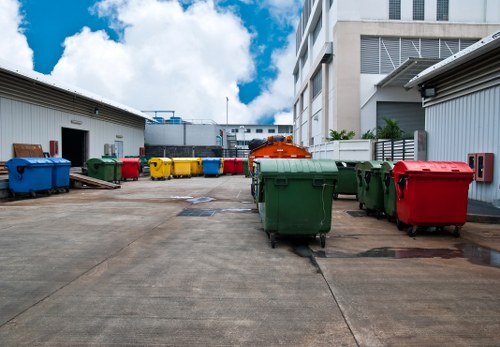 Our recycling activities in Cranford include practical, local actions: segregating metals, paper, glass, WEEE (electricals), mattresses for specialist recycling, and textiles for charity channels. These activities mirror borough guidance that encourages residents to separate recyclables at origin, increasing the quality and value of material streams.
We also invest in staff training so our clearance crews can quickly identify items for reuse, hazardous materials that require specialist handling, and components that should be directed to regulated processing facilities. This expertise reduces contamination and improves the overall recovery rate within the eco-friendly waste disposal area framework.
 To make our Cranford house clearance services genuinely sustainable, we emphasise prevention as well as recovery. That means advising clients on options to reduce waste generation before, during and after a clearance: donate, repair, refurbish and recycle. Our role is to deliver an efficient, low-impact clearance that respects the community, supports local charities and aligns with wider efforts to create a sustainable rubbish area in the borough.
Key aspects of our approach include:
- Recycling percentage target: a 75% diversion from landfill by 2028.
- Local transfer stations: consolidating deliveries to licensed facilities to speed processing and cut emissions.
- Charity partnerships: rehoming serviceable items locally to reduce waste and support communities.
- Low-carbon vans: hybrid and electric vehicles on urban routes to lower our fleet emissions.
- Borough-aligned separation: working with council schemes for glass, paper, textiles, WEEE and bulky items.
Our commitment to a greener Cranford means every clearance is planned with the environment in mind. By combining robust sorting, trusted partners, and a low-emission fleet, we deliver house clearance services that protect local resources and contribute to a healthier, more sustainable community.